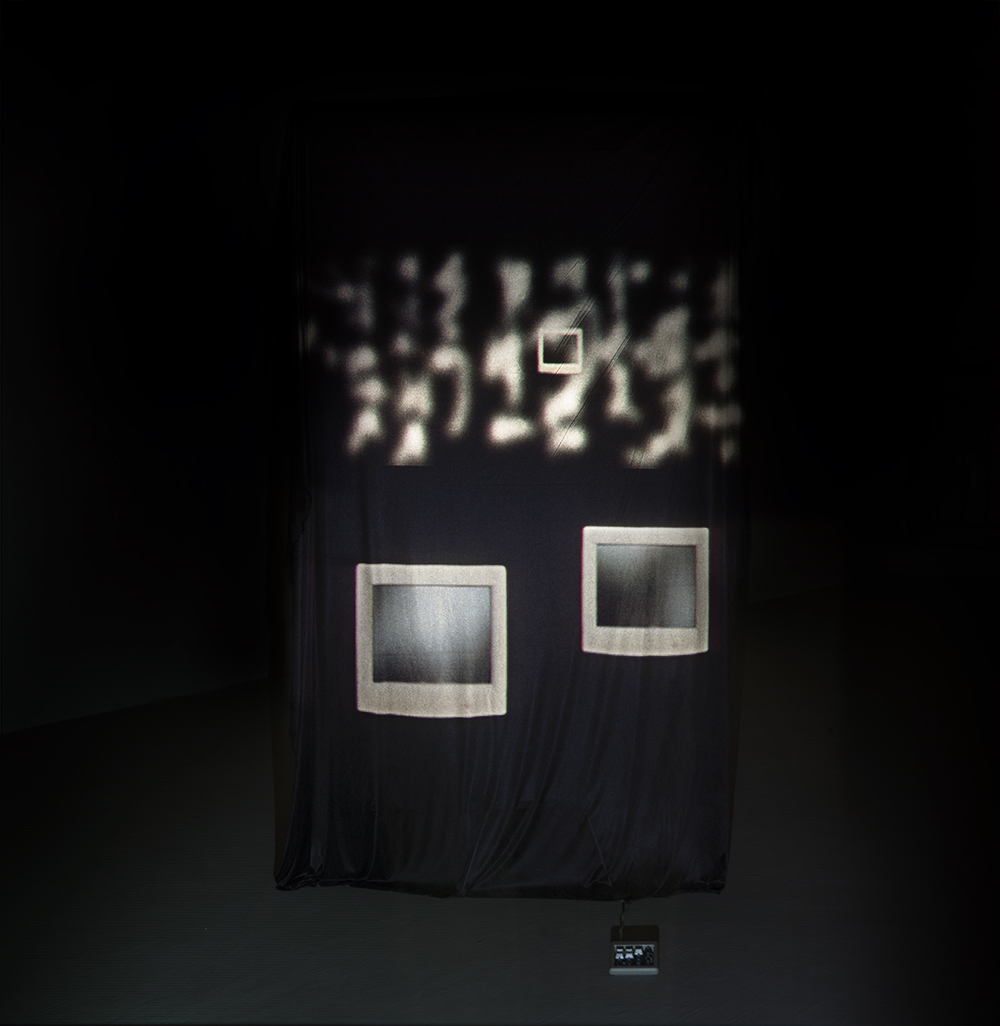
互动装置:投影、黑色天鹅绒幕布、微型电脑、小键盘控制器、数字图像
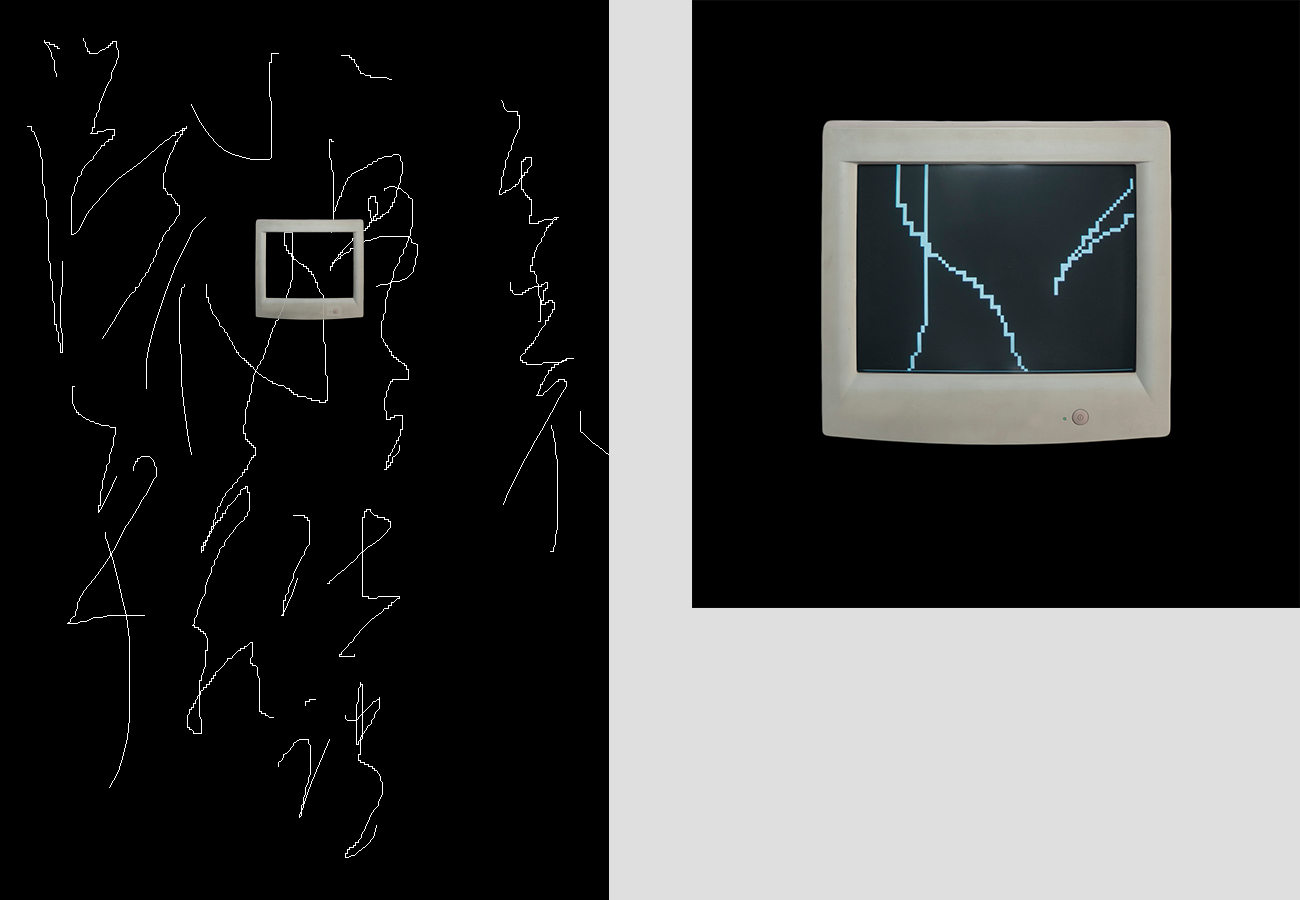
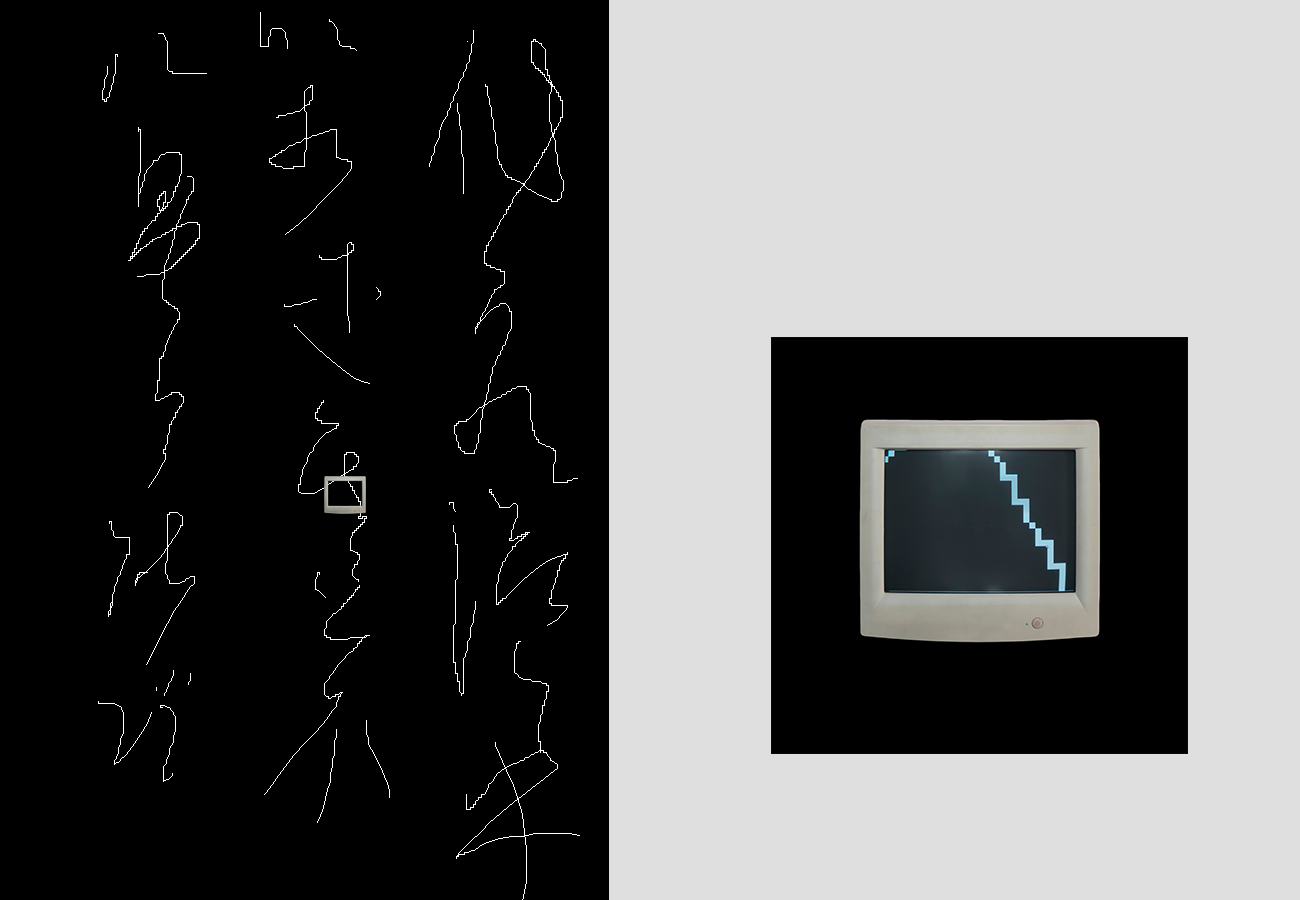
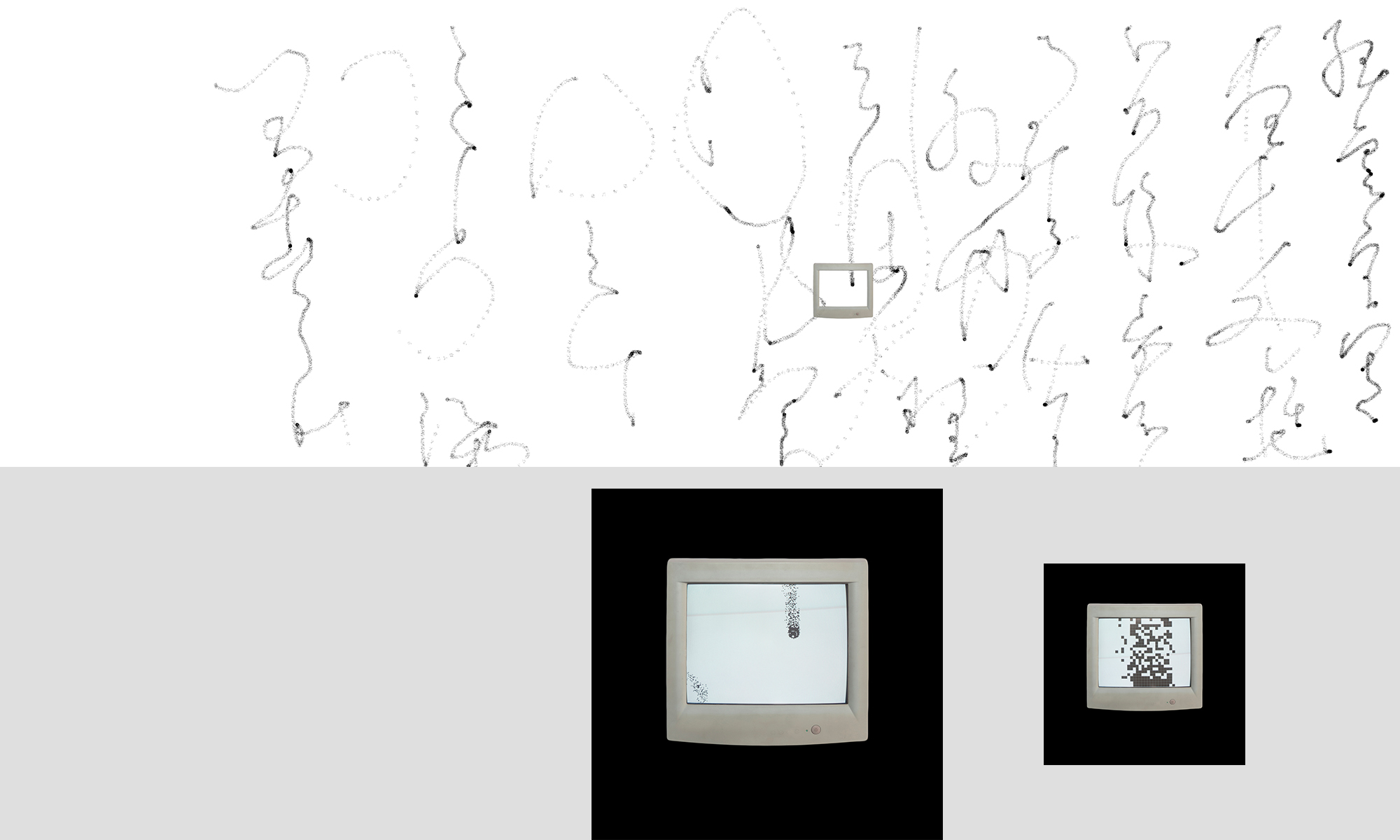
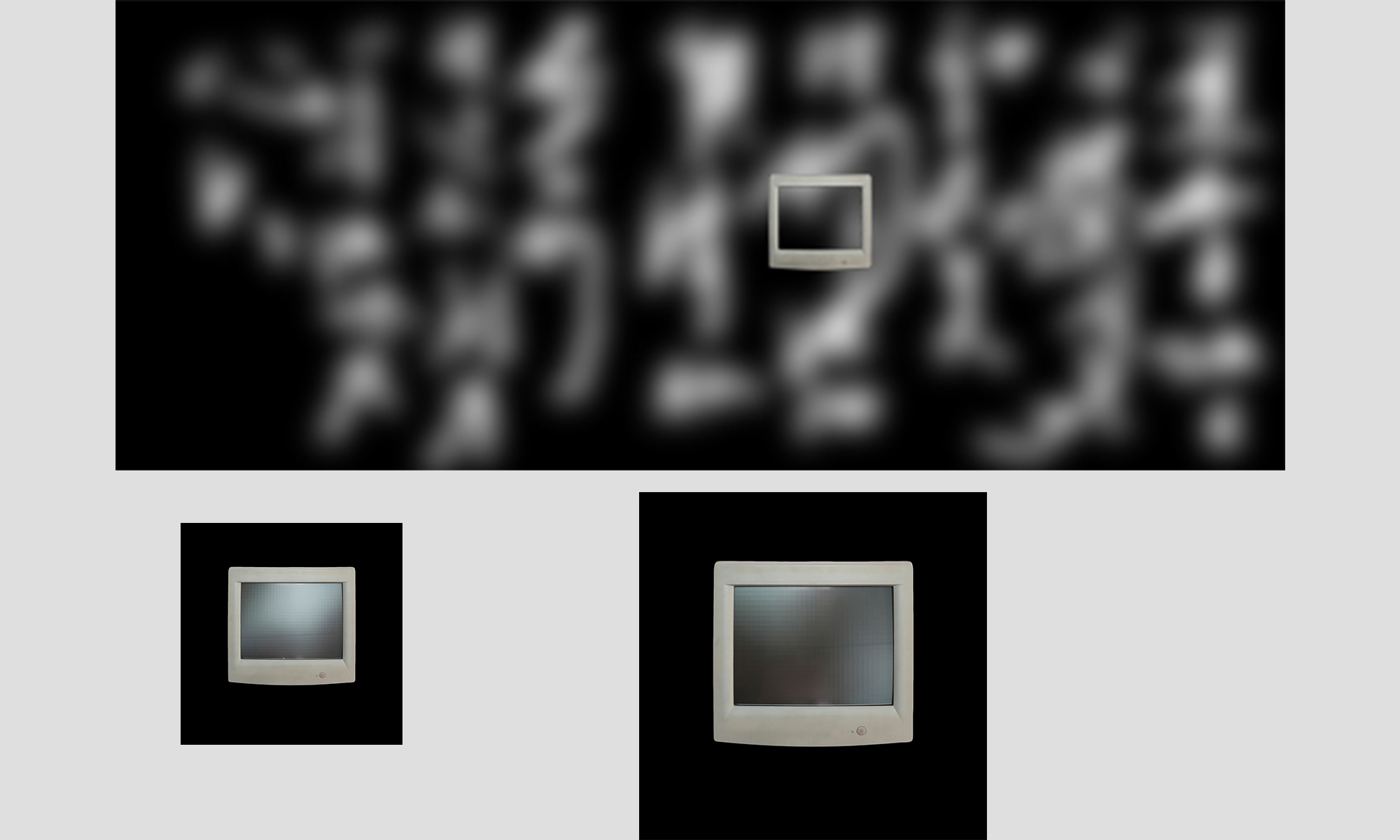
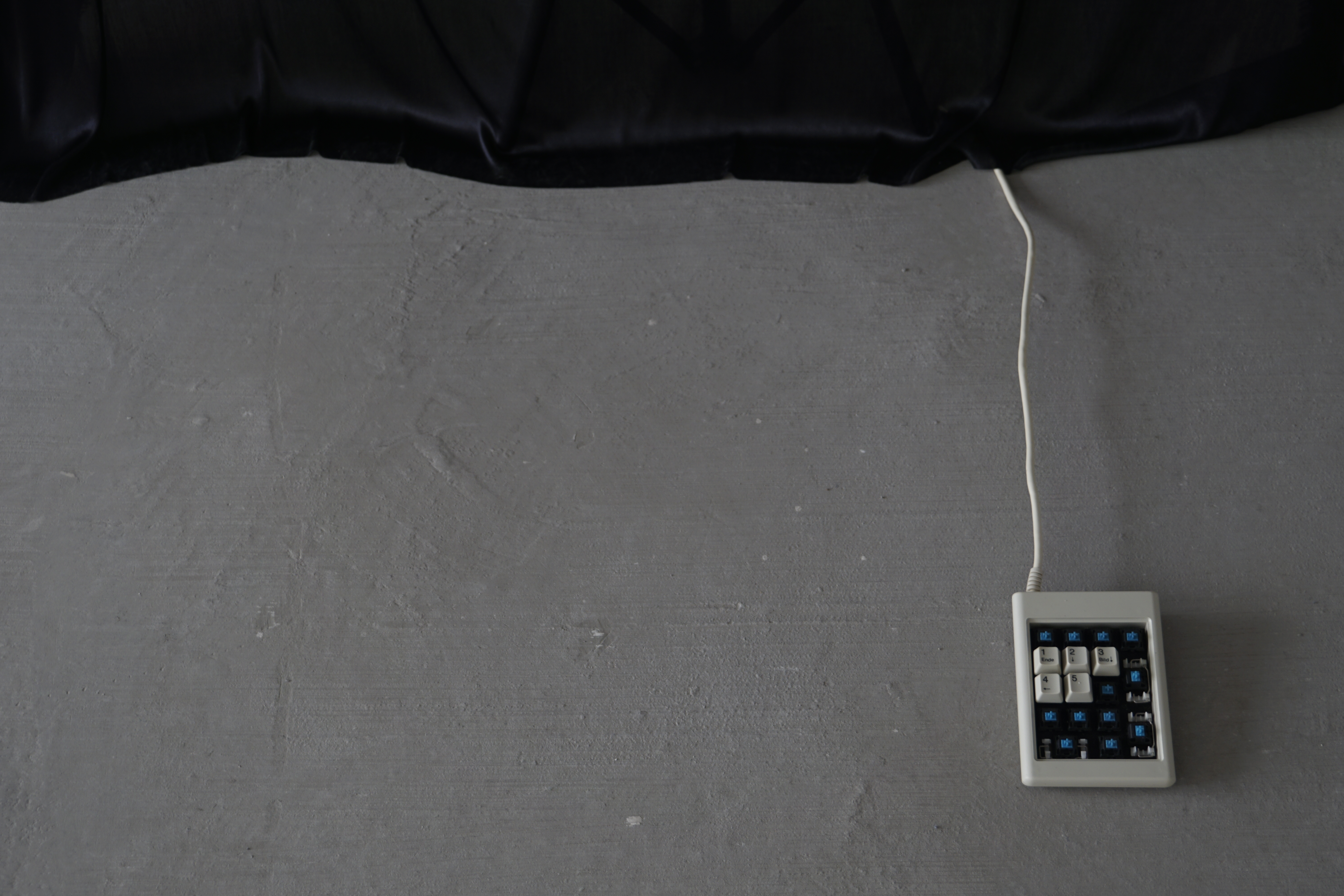
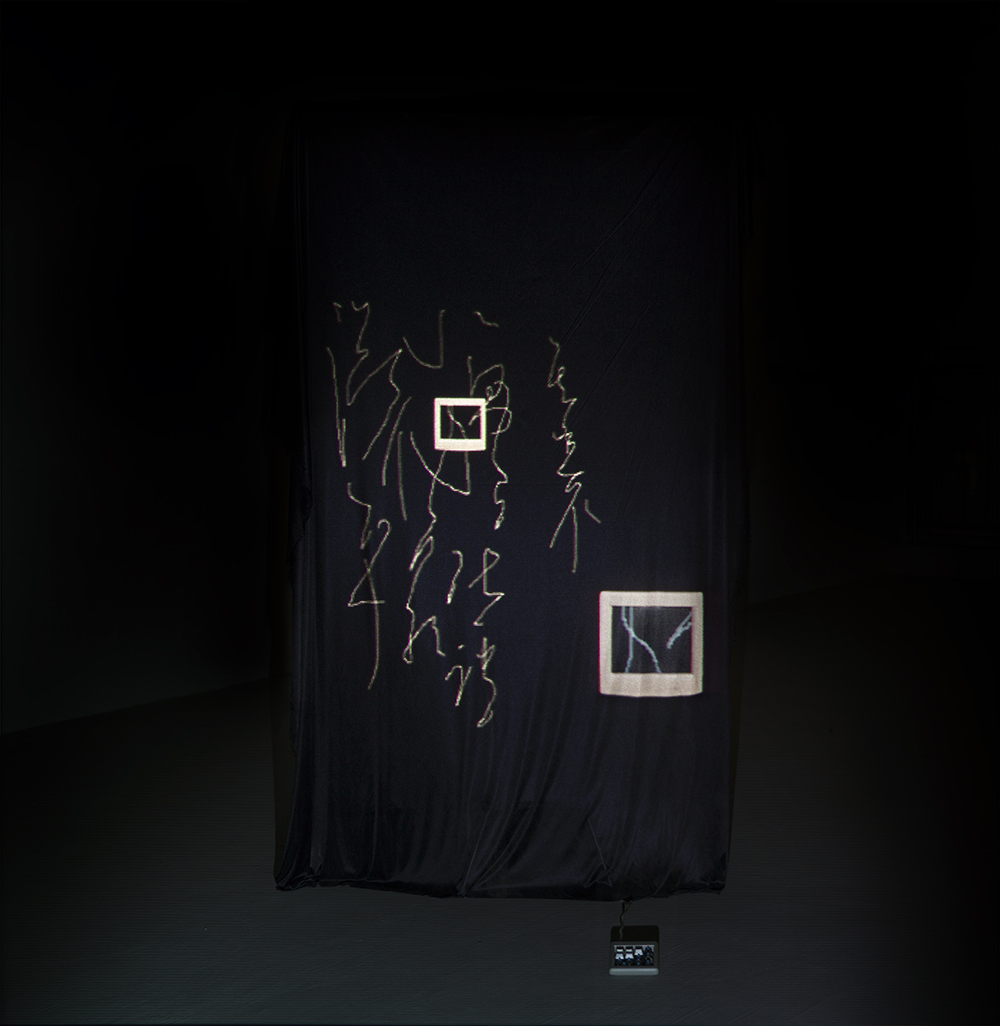
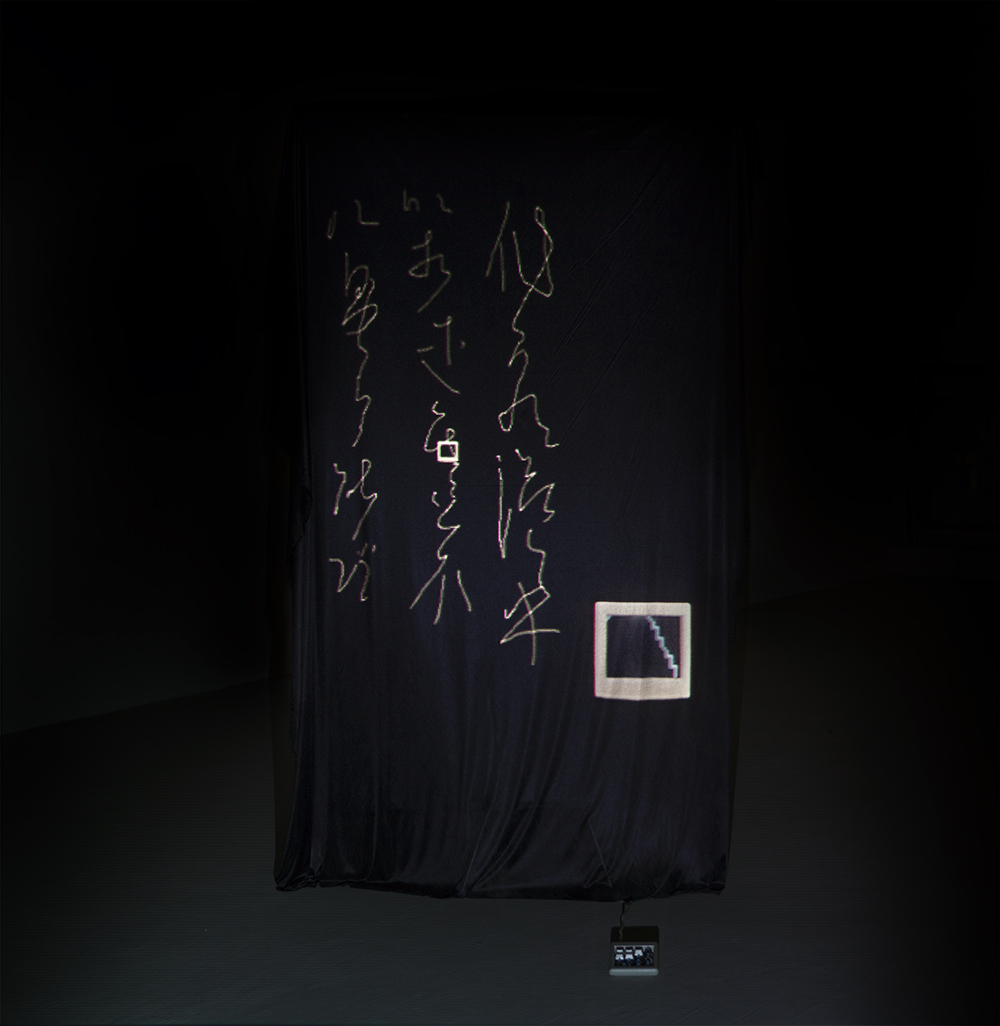
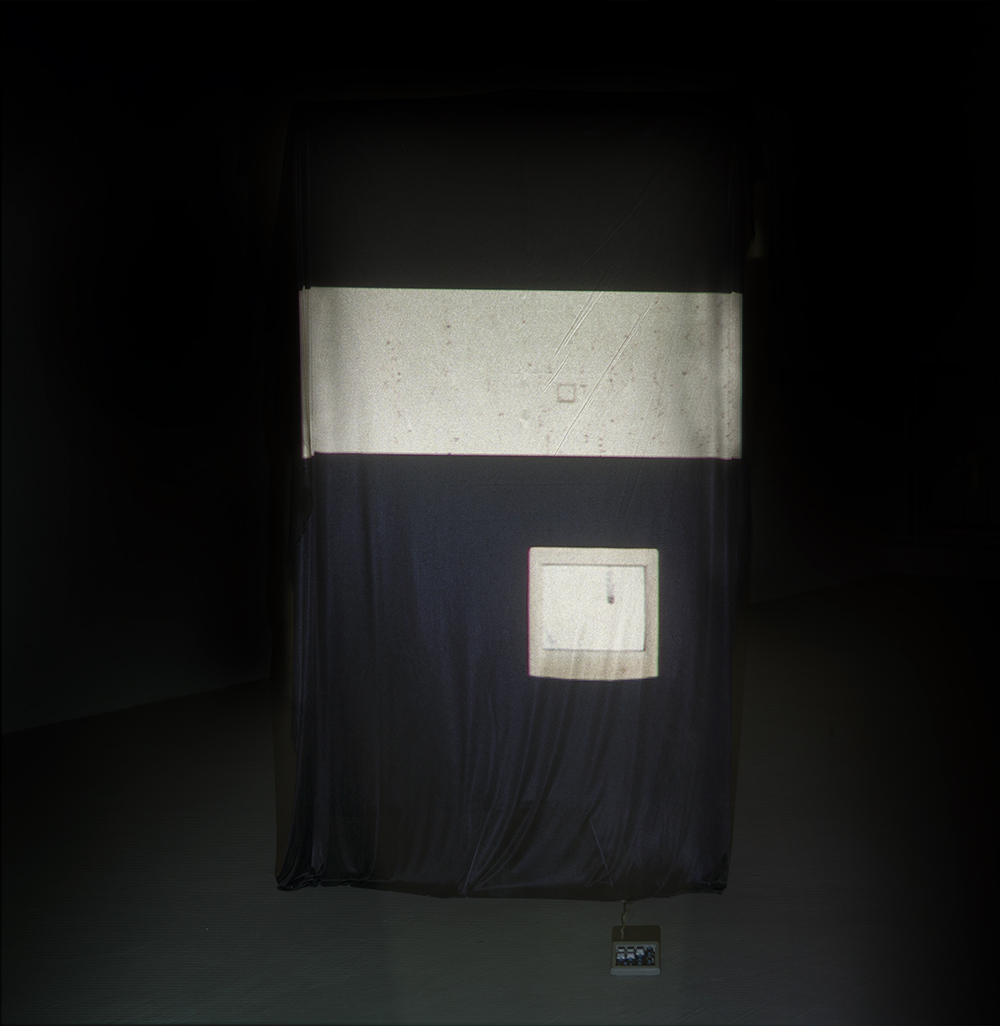
《Untitled.bmp》由一组形似中国草书、但不包含任何可读汉字的数字图像构成。这些图像使用早期Windows系统自带的“画图”软件绘制,并刻意保留低分辨率位图的像素质感。微型电脑隐藏在黑色天鹅绒幕布后方,负责接收小键盘的操作输入,并将图像输出至投影仪与CRT显示器。观众被邀请在控制器前,通过按键前后翻页,移动投影画面中的小型CRT取景框,并在旁边较大的CRT图片的屏幕范围内观看相应局部的放大、缩小与像素化变化。
作品首先将自身呈现为一个审美对象。被去除文字义务的伪书法保留了草书的速度、转折、疏密、行气与身体运动感,却不再指向确定的意义。CRT的米白色外壳、低清屏幕、位图颗粒和机械感控制器,则不断将观看从传统书法的联想中拉回早期数字技术的视觉质地。黑色幕布、暗环境与投影光形成近似聚光灯的效果所以同创造的“剧场感”,也都成为整体审美经验的一部分。
在这一由光线、物件、图像、身体和界面共同构成的场域中,文化深时间、数字技术的近过去与实时互动的当下彼此错置。作品并不要求这些关系被还原为一套确定的观念命题,而是以一种带有“谜”感的方式,将原本互不相属的元素拼合起来:它像书法、档案、操作界面、舞台和某种未知仪式,却始终不完全成为其中任何一种。观念性的阅读仍然可以进入作品,但最终需要回到对线条、像素、光、材质、尺度与氛围的直接感知。
作品完成于2015年。当时其中的CRT、早期Windows位图和低保真数字图像主要呈现为一种已经略显过时的技术“近古”。随着2020年代“梦核”“旧核”等网络视觉风格的兴起,这些元素又逐渐获得了新的文化联想,与怀旧、疏离、失真记忆和非现实空间产生联系。作品本身没有改变,但观众辨认和感受这种技术质地的方式,已经随时间发生了变化。
Interactive installation: projection, black velvet curtain, microcomputer, keypad controller, digital images
Untitled.bmp consists of a sequence of digital images that resemble Chinese cursive calligraphy without forming any legible characters. They were drawn using Microsoft Paint in an early version of Windows, with the coarse pixel structure of low-resolution bitmap graphics deliberately preserved. A microcomputer concealed behind a black velvet curtain receives input from a small keypad and sends the images to the projection system. Viewers are invited to operate the work: they can move backwards and forwards through the sequence, reposition a small CRT-shaped viewing frame within the projected image, and enlarge or reduce the selected area as it appears within the screen of a larger CRT image.
The work presents itself first and foremost as an aesthetic object. Released from the obligation to function as written language, the calligraphic forms retain the speed, rhythm, density, directional flow and bodily gesture of cursive script, while no longer referring to any fixed meaning. At the same time, the beige casing of the CRT, the low-definition screen, the visible bitmap grain and the mechanical character of the controller repeatedly draw the viewer away from the category of traditional calligraphy and back towards the visual texture of early digital technology. The black curtain, darkened surroundings and concentrated beam of the projector create a theatrical setting in which light, image, material, interface and physical interaction all contribute to the work’s atmosphere.
The work was made in 2015, when its CRT monitor, early Windows bitmap graphics and low-fidelity digital imagery primarily registered as the remnants of a technology that had only recently become obsolete. Since the emergence of online aesthetics such as dreamcore and related forms of retro-digital imagery in the 2020s, these elements have acquired a different set of associations—with nostalgia, estrangement, distorted memory and spaces detached from ordinary reality. The work itself has not changed, but the way viewers recognise and experience its technological textures has.